Regional Variations in Deposit Match Structures for Multi-State Digital Gaming Platforms
Freya Klein · Nov 8, 2026

Regional Variations in Deposit Match Structures for Multi-State Digital Gaming Platforms
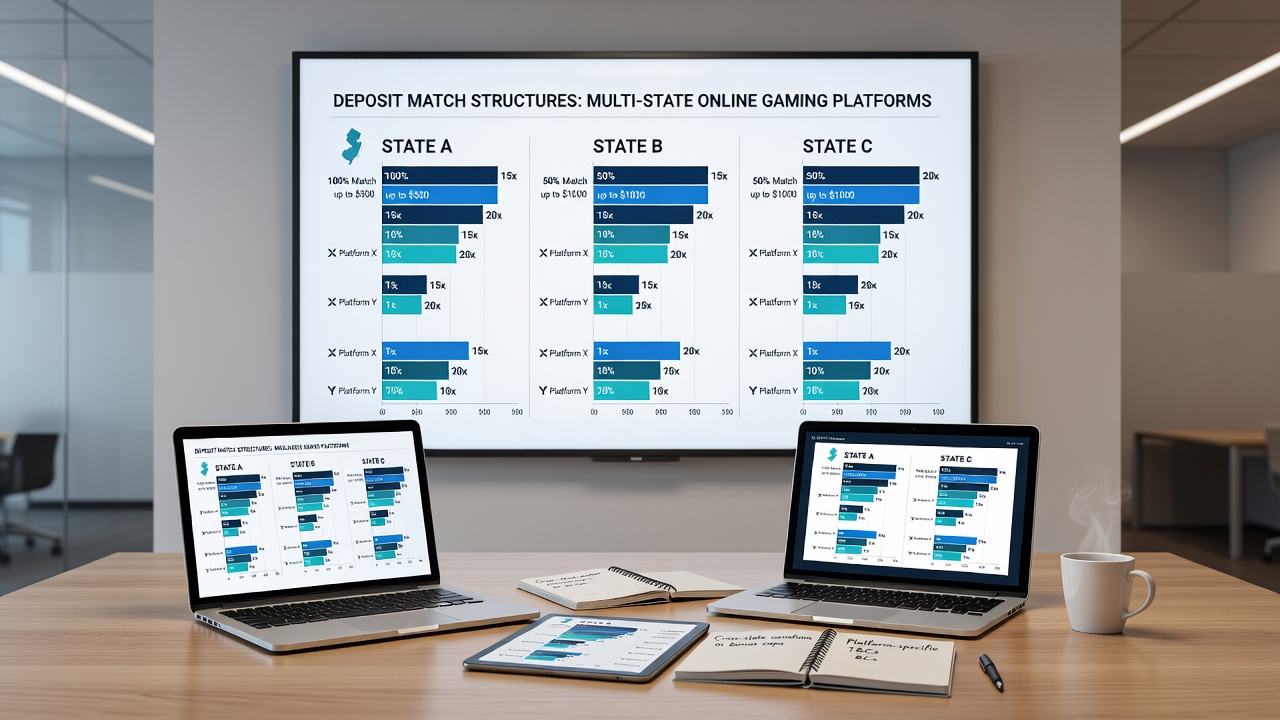
Deposit match structures function as core promotional tools within multi-state online gaming platforms where operators adjust percentages, caps, and wagering requirements to align with distinct regulatory environments. Observers note that these variations emerge because each state maintains its own licensing conditions, tax obligations, and player protection rules that directly influence how matches are calculated and delivered. Data from industry reports indicates platforms operating in both New Jersey and Pennsylvania often apply a 100 percent match up to 500 dollars in one jurisdiction while capping the same offer at 300 dollars in the other due to differing revenue share models.
State-Specific Match Percentages and Caps
Researchers tracking patterns across regulated markets have documented that Michigan platforms frequently extend 200 percent matches on initial deposits reaching 1000 dollars, whereas Connecticut sites limit matches to 150 percent with a 750 dollar ceiling. These differences arise because state gaming commissions impose unique contribution rates that operators factor into bonus design. Figures from the New Jersey Division of Gaming Enforcement reveal average match values stabilized around 350 dollars per qualifying deposit throughout 2025, with adjustments projected for late 2026 as new market entrants finalize their structures. Operators must also navigate minimum deposit thresholds that range from 10 dollars in some states to 25 dollars in others, creating layered eligibility criteria that players encounter during account funding.
Playthrough Requirements and Game Contributions
Playthrough multipliers attached to deposit matches further differentiate offerings across state lines. Analysts have observed that Illinois platforms require 25 times the matched amount in eligible wagers, while West Virginia operators set the multiplier at 30 times with stricter game weighting rules. Slot titles typically contribute 100 percent toward completion in most jurisdictions, yet table games such as blackjack often receive only 20 percent credit, forcing players to adjust strategies accordingly. One study released by a university research group in 2025 highlighted how these weighting systems extend average completion times by 18 percent when participants split activity between multiple states.
Additional restrictions appear in the form of maximum bet limits during the wagering period. Experts examining platform terms note that several states enforce a 10 dollar maximum bet per spin or hand while the match remains active, with violations resulting in forfeiture of remaining bonus funds. These caps serve to protect operators from excessive risk exposure while still allowing steady progress toward requirement fulfillment. Data compiled by the Michigan Gaming Control Board shows that 62 percent of matched deposits in the first half of 2025 met full playthrough within seven days when players adhered to these limits.
Cross-Border Platform Adjustments and November 2026 Outlook
Platforms licensed in multiple states implement automated systems that detect user location and apply the corresponding match structure at the point of deposit. This technical approach ensures compliance without manual intervention, though it occasionally produces discrepancies when players access accounts while traveling. As of November 2026, several states are scheduled to review their bonus regulations, with proposed changes including standardized disclosure formats for match terms. Industry associations have compiled preliminary data suggesting that harmonized rules could reduce administrative overhead for operators by approximately 12 percent.
Payment method compatibility also varies, since some states prohibit certain e-wallets from triggering deposit matches. Credit card deposits qualify in New Jersey and Pennsylvania yet face restrictions in Delaware, where only bank transfers and approved prepaid options activate the bonus. Observers note that these payment rules stem from state-level banking regulations rather than gaming statutes, creating additional complexity for multi-state providers. A report issued by a Canadian research institute documented similar regional payment hurdles in provincial markets, underscoring the global nature of these structural challenges.
Player Eligibility and Account Verification Processes
Eligibility for deposit matches hinges on verified account status, age confirmation, and geographic compliance checks that platforms conduct in real time. New users must complete identity verification before the match applies, a step that typically requires government-issued identification and proof of address. Existing accounts may receive match offers only after a cooling-off period, often set at 30 days between qualifying deposits in certain jurisdictions. Those who have studied these systems report that verification delays average 45 minutes during peak hours, affecting the timing of bonus activation for time-sensitive promotions.
Self-exclusion lists and problem gambling safeguards intersect with deposit match availability in every state. Operators automatically block matched offers for individuals on voluntary exclusion registries, and some states mandate additional cooling periods before re-eligibility. These measures integrate directly into the deposit flow, preventing inadvertent bonus claims. Regulatory updates scheduled for 2026 aim to expand data-sharing protocols among states, allowing more seamless enforcement of exclusion lists across platforms.
Conclusion
Deposit match structures across multi-state online gaming platforms reflect the interplay of local regulations, operator risk management, and technical implementation requirements. Variations in percentages, caps, playthrough multipliers, and payment eligibility create distinct experiences for users depending on their primary jurisdiction. Continued monitoring by state commissions and industry groups will shape how these structures evolve, particularly with anticipated regulatory reviews approaching in November 2026. Accurate information remains accessible through official regulatory portals and licensed operator disclosures.